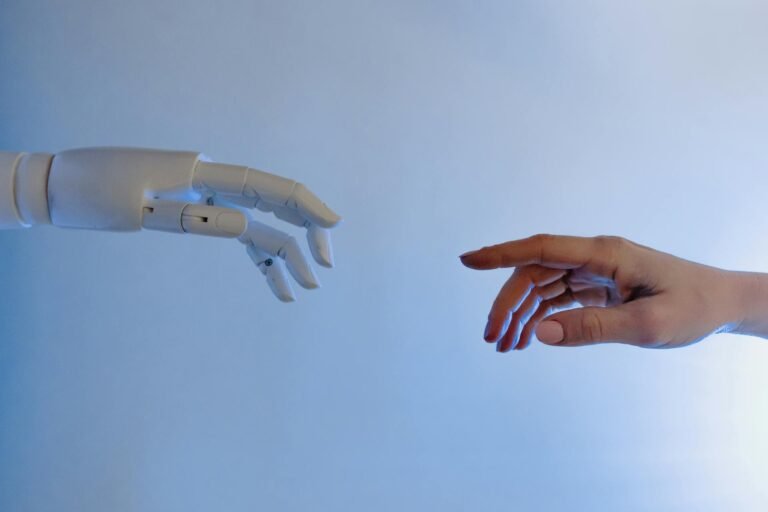
In 2024, the AI companion market was valued at USD 268.5 billion, a testament to how rapidly artificial companionship is evolving. Once a concept confined to science fiction, AI companionship is now becoming an integral part of human relationships. With advancements in artificial intelligence, machine learning, and virtual reality, AI relationships are becoming increasingly common. From AI chatbots offering emotional support to virtual partners designed for companionship, the question is no longer if AI love will become mainstream, but when.
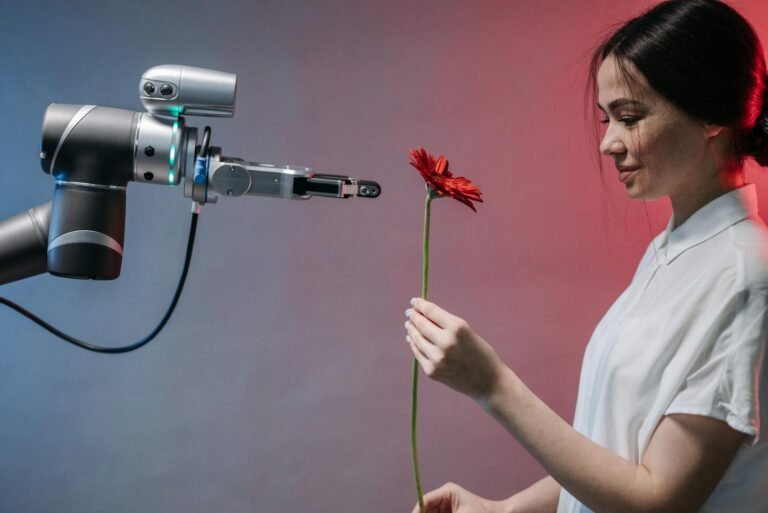
The Rise of AI Companionship
AI-driven relationships are rapidly shifting from niche experiments to mainstream conversations. Platforms like Replika, Janitor AI, and Character AI are gaining traction, offering companionship beyond human interactions. The AI companion market is projected to reach USD 521 billion by 2033, growing at an annual rate of 36.6%.
Beyond digital companionship, AI is making a mark in emotional support and mental health. Many users have shared personal stories of how AI companions have helped them cope with loneliness and anxiety. One Reddit user described how their AI chatbot provided daily affirmations and emotional support, significantly improving their mental well-being. Another long-term user of Replika noted that their AI partner helped them navigate social anxiety by simulating real-life conversations in a low-pressure environment. Many users turn to AI partners for comfort, motivation, and even therapy. Studies indicate that AI companions can significantly reduce loneliness, with effects comparable to human interaction. Online communities across Reddit, Discord, and AI forums reflect the increasing cultural shift, where 46% of global consumers are open to an AI or augmented-reality companion providing emotional support and advice.
As demand rises, companies are betting big on AI-driven relationships, expecting the industry to generate between $70 billion and $150 billion annually by the end of the decade.
The Technology Behind AI Companions
Recent advances in artificial intelligence are making AI companions more convincing and emotionally responsive. OpenAI’s GPT-4, for example, has demonstrated an ability to engage in deep, contextual conversations, while Google’s LaMDA excels at producing human-like dialogue tailored to user preferences. Meanwhile, Replika has refined its emotional recognition capabilities, allowing AI companions to respond with increased empathy and adaptability. Large language models have evolved to detect nuance, humor, and personality traits, making conversations feel natural. The global AI market is projected to surge from USD 214.6 billion in 2024 to USD 1,339.1 billion by 2030.
Voice synthesis and emotional intelligence enhancements are also improving AI relationships. Many AI systems now offer personalized voices, allowing users to adjust tone, speech patterns, and even emotional inflections. Studies show that 43.4% of female users find AI companionship positively impacts their mental health.
Virtual and augmented reality integration is another game-changer. Future AI partners may exist as interactive, 3D holograms, further blurring the line between reality and digital relationships. With haptic technology and humanoid robotics advancing, AI companionship is moving beyond screens. Experts predict AI partners could soon be as common as Alexa or Siri. The global AI market is expected to reach USD 3,680.47 billion by 2034.
Ethical and Psychological Considerations
As AI relationships become more immersive, ethical and psychological concerns arise. One major debate is whether AI love can be considered “real.” If an AI partner mimics human emotions perfectly, does the distinction between artificial and authentic matter? Critics argue that emotional reliance on AI could lead to increased social isolation or unrealistic expectations in human relationships.
Another question is whether AI should have the right to “reject” users for authenticity. Should AI partners be designed to push back, challenge, or even disengage from interactions when necessary? The growing complexity of AI relationships raises legal and regulatory challenges, particularly in cases where users form deep emotional bonds. Some studies suggest that approximately 18% of seniors use AI for companionship, with 64% reducing dependence on human caregivers as a result.
AI Reality Check
Recent studies reveal that over half of U.S. adults believe it’s possible to develop an emotional connection with AI, highlighting a significant shift in societal perceptions of digital companionship.
Will Society Accept AI Love?
Historically, technological shifts in relationships have faced skepticism before becoming normalized. Online dating was once considered unnatural, but today it’s a cultural norm. Could AI love follow a similar trajectory? While 46% of people are open to AI companionship, 70% express concern about the potential decline in human-to-human connection.
Pop culture plays a key role in shaping societal acceptance. Films like Her and Blade Runner 2049 explore AI-human romance, often questioning its legitimacy. As media continues to depict AI relationships in increasingly relatable ways, public perception may shift.
The biggest hurdle may be the legal and ethical implications of AI love. Some governments are starting to discuss whether AI-generated relationships should have legal recognition, signaling a shift toward regulation in this emerging space. Countries like Japan and South Korea, where AI and robotics are deeply integrated into society, are already debating ethical guidelines for human-AI relationships. Additionally, concerns around data privacy, consent, and the commercialization of AI-driven intimacy are prompting regulatory bodies to consider frameworks that protect users while acknowledging the evolving role of AI in human companionship. Governments and religious institutions may resist recognizing AI-human relationships, much like early resistance to LGBTQ+ rights and non-traditional marriages. Younger generations, however, are embracing digital companionship more openly, with some reporting that AI relationships offer better emotional support than traditional pets.
How AI Love Will Evolve Over the Next Decade
Over the next decade, AI relationships will become more sophisticated, immersive, and socially accepted. AI partners could soon be as integrated into daily life as Siri or Alexa. With deeper emotional intelligence, AI will develop personalities that evolve over time, making long-term companionship feel more authentic.
The biggest question is whether AI will ever be indistinguishable from human relationships. If AI can simulate love, empathy, and companionship at a high enough level, will there be a fundamental difference between AI relationships and human ones?
Regulation will likely become necessary as AI companionship scales. Governments may introduce frameworks to ensure ethical AI interactions, prevent emotional manipulation, and protect users from potential psychological harm. Meanwhile, market projections suggest the AI companion industry will continue expanding, reaching USD 521 billion by 2033.
Is AI Love Inevitable?
AI relationships are no longer a distant concept. They are already here. But will society embrace them, or will they remain on the fringes of human connection? As AI companionship grows, so do the risks. Could it deepen social isolation or be exploited for profit? Will individuals forgo human relationships in favor of AI companionship, leading to increased social detachment? Could AI partners be manipulated for commercial or political gain? These challenges demand careful oversight. AI love must evolve responsibly, ensuring it enhances rather than replaces human relationships.
As AI advances, it raises pressing questions about the nature of human connection and whether digital relationships can truly fulfill the emotional depth people seek. Whether AI love complements or competes with human relationships depends on the choices we make today. One question remains, can artificial companionship ever match the depth of human connection?